Showing posts with label Book Review. Show all posts

Sunday, 31 October 2021

书评 - You Are Not Listening

 聆听最重要的,不是知道对方在说什么,而是明白对方为什么要跟你说。


*


八月的时候看了Kate Murphy写的You Are Not Listening。这是一本蛮近期的书;2020年一月出版,应该很多人没有听过,因为大家都没有在listenGet it? They are not listening. 哈哈哈。


老话有句:“上帝给我们一张嘴和两个耳朵,是要我们多听少说。”,可是我们的聆听功课还是做得不是很好。Kate Murphy一开头就质问为什么市面上有这么多说话的课程和练习,却没有教我们怎么聆听的呢?


虽然说书里有很多实用的小撇步,可是我觉得作者没有organize到很好,到后期有一点杂乱无章。而且实际内容少得可怜,244页里面有接近1/3reference,不过总比那些没有内容却还一直重复论述硬撑版面的书好。


*


作者认为聆听是一个主动(active)的过程,就是说你是需要“用力”的,不是只是坐在那里开着耳朵。我们要专注于说话者,除了用耳朵听之外,还要用眼睛观察对方的表情和肢体语言,从所有的感官讯息中了解对方想要带出的意思。我们也要表现出自己在乎对方想表达什么,等待对方说完之后才开口。


作者说了一句很玄的话:“Listening is about the experience of being experienced”。在聆听的过程中我们仿佛经历了对方所经历过的事;这是让我们达到人与人连结的关键。


对方说完话之后,我们一般有两种回应方式:转移回应(shift response)和支持回应(support response)。比如今天有人跟你说《鱿鱼游戏》很好看,shift response的例子可能是“我很少看韩剧”、“我觉得Alice in Borderland比较好看”;如果是support response我们会说“你觉得哪一part最好看”。


Support response的重点在于open ended,让说话者能够很顺理成章分享自己的想法。它有一点鼓励的成分;这是很重要的,因为有时候说话者可能也不太知道自己为什么说这番话。一个好的聆听者能够帮助对方整理思路,让他更了解当下的情绪。


作者认为shift response有一种自恋的心态,因为它总会把话题焦点带回自己身上。这不一定代表shift response的人很白目——当我们对社交感到不舒服,往往会将话题转移到自己熟悉的领域,或者想要马上给出解决方案来结束谈话。而且很多时候我们是真心认为自己在给出很好的建议(“啊Alice in Borderland真的比较好看嘛,你看了一定会喜欢的”),所以当有人这样回应你的时候你也不要太过玻璃心觉得对方不爱你。


有时我们要的不是解决方法,只是需要人听我们说话。在讲出自己的想法的过程中,我们会更了解事情的全貌,从而知道要怎么靠自己去处理当下的事情。如果对方没有要求,我们就开始给建议,我们是在告诉对方:“没有我的建议你不行啦,快听我的”,这样会让对方的信心更受挫。我们不是别人,永远没有办法完全设身处地了解对方的处境。我们给出的建议往往只是“我们”会做的决定,不代表对方也该做同样的事。


*


在聆听的过程中,只是点头和重复对方说的话是不够的;我们要诠释对方的话,然后给予适当的回应。假设你的同事告诉你她要换办公室了,她可能是纯粹想表达收拾东西很烦、或者是对新岗位表示期待、也可能是在担心不能适应新环境、还是在看你有没有舍不得自己的意思。


我们说话的目的是想要得到回应,而聆听能够让我们做出正确的动作。队友把球传给你,要是你没有把注意力放在球场上,你怎么知道他是要你把球传给另一个队友、射门、还是等对方摆脱对手之后再传回给他。当结束一场对话之后,我们可以问自己几个问题:我刚才知道了对方什么事、对方的状态如何、他是怎么看待我告诉他的话。如果你无法回答这些问题,那你就需要再加强自己聆听的能力。


我们不去聆听的,往往是与我们最了解的人,因为“我已经知道他在想什么”。这或许是在考验你有多懂对方,可是这份了解的有效期会有多长呢?这个礼拜狂点无糖咖啡的顾客,下个星期会不会还是想喝一样的饮料?


人的想法、态度和价值观一直都在改变。一味用过去的经验来和当下的人相处通常不会有太好的结果——你最爱的人还在以为你是十年前的你,你会有何感想?唯有聆听,我们才能时刻更新自己对其他人的了解,毕竟现在永远比过去重要。


*


最后想说一个很重要的点:如果你没有什么好说的,那就什么也别说。有时人们会给shift response的原因在于他们觉得自己应该说些什么——当别人告诉我们自己的事,如果我不给一点反应,那岂不是很尴尬?所以一旦对话中出现空白,很多人往往会开始焦虑,说些没营养的话填补这段空缺。


作者表示,能够接受谈话中出现沉默往往是亲密度的指标。因为不够了解对方,不知道此刻他们正在想什么,我们就会想重启话题化解尴尬。在一段舒服自在的关系里你是不会觉得赖在彼此身边不说话是一个问题的。


在不恰当的时刻接话可能会打断别人的flow,原先想对你说的话就这样吞进肚子里了。我们不是有什么想法都需要马上说出来的;有时候等到你已经沉淀好心情再说能达到更好的效果。


当别人告诉你他的想法、情绪、经验,他其实是在把一部分的自己交托于你。如果你没有把这个球接好,那以后对方也许就什么都不会再跟你说了。聆听是礼貌,也是尊重,告诉对方你很注重这份关系,愿意让他进入你的生命,这样对方也才会敞开心扉,接受你进入他的人生。

Sunday, 9 June 2019

Book Review - Finish (Jon Acuff)


"Starting is fun, but the future belongs to the finishers."

TLDR: the biggest enemy in finishing goals is perfectionism.

*

According to studies, 92% of New Year's Resolutions fail. People always put more emphasis on the starting, on how much planning you should have, the effort required etc. Jon Acuff disagrees.

Starting is easy. You can always start dieting, start quitting cigarettes, start learning a new language every once in a while.

To finish what you have started is the hard part.

Like its name suggests, "Finish" is a book talking about finishing goals. I think this book is quite harsh to losers like us. As you flip through the pages, you will see yourself amid the examples, who have repeatedly failed themselves in completing goals and promises.

The author provides the reasons why people do not finish their goals, as well as some tips on how to overcome them. Although the writing is weaker near the end, I think it is still a good read nonetheless.

Image result for finish jon acuff

According to Acuff, our worst adversary is perfectionism. You will see this throughout the book.

As we start our goals, the first thing it whispers to us is "quit if it is not perfect". This often plays into our mind because we always expect straight A's in our goals. Once we have broken the streak in healthy eating, we feel that eating junk for the next day doesn't create much harm too.

We all know that things are never perfect, yet we still set up unachievable standards for ourselves. That's why the day after perfect is what separates finisher from starters; finishers embrace imperfections because they know that something imperfect will not kill them.

*

Have you ever set a goal or a to-do-list too big you realized that you couldn't complete them? Scientists call this "planning fallacy", where people underestimate the time and effort required for a task.

The author suggests that, after planning your goals, either cut the target into half or double the time you take to complete it. Of course perfectionism does not allow that. But studies have shown that people who take "shortcuts" have increased performance and are motivated by their "reduced" success.

*

Time is limited. So, to get things done we have to manage our time properly. We can listen to audio books while doing workout, studying finance while waiting for bus, preparing slides while having lunch. If we slice our time nicely, we can get them all done.

Wrong.

That's another lie from perfectionism: you can have it all.

The only way you can be good at things is to invest your time and effort. To give them to some goal you must take them away from others; to be good at something you must suck at others. You can't get all off them done. Hence you have to choose which you want to succeed at, otherwise you will fail them all.

*

I always despise using rewards or punishments to propel yourself towards a goal; you shouldn't use external factors to motivate yourself because the rewards should come from the goal itself.

Jon Acuff said that it is perfectionism talking. Perfectionism believes success must be full of hardship and fun holds no value.

Internal motivation is good. But to keep yourself awake till the finishing line you need external motivation. The author suggests two:
1. Reward motivation
2. Fear motivation.

As you choose either of them, perfectionism tells you that you need neither: winners don't need motivation. They just get things done. That's the moment you know that you are on the right path. Perfectionism only gets loud when people start moving.

Related image

I thought I can stop here but I realised I haven't talked about the most important things yet: hiding places and noble obstacles.

Hiding places first. They come in two forms. The first is the unproductive ones, like watching YouTube and drinking with friends.

The "productive" ones are hard to detect. Have you ever found yourself checking emails, cleaning your room or proofreading assignments that you have competed long ago before starting your work?

"I wanted to do abs but look at the floor! I can't sit there before I have cleaned it first right?"

Meanwhile noble obstacles come with two words: "until" or "if-then".

Until I buy myself a pair of decent sports shoes I won't start working out. Until I have a good plot for my story I won't write the book. If I start eating healthy I will be poor real soon. If I establish my own business I will become so busy that I lose my time with my loved ones.

Hiding places and noble obstacles are, still, perfectionism in disguise; it tells you that you should do everything perfectly, otherwise might as well not doing them at all. Perfectionism always makes things hard and complicated; finishers make things simpler.

Goals are simple but not easy. It's time to leave your hiding places and abandon the noble obstacles. Because goals you refuse to chase don't disappear.

They become ghosts that haunt you for the rest of your life.

Saturday, 13 April 2019

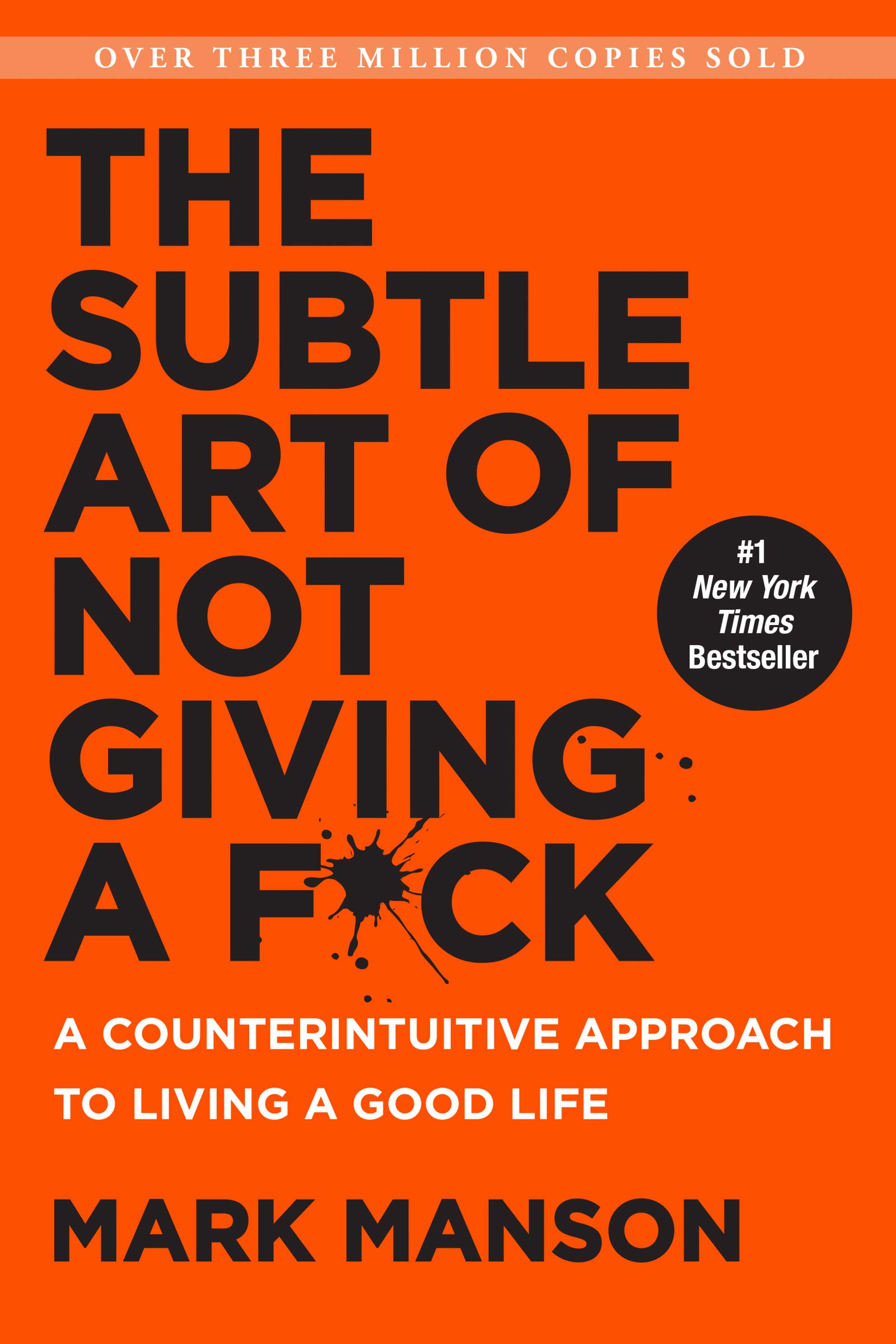
Book Review - The Subtle Art of Not Giving A F*ck


There are way too many "fuck"s in this book that I have learnt not to give a fuck about them.

Now that I have specifically mentioned it, doesn't it mean that I actually DO give a fuck about them?

I mean, if you don't really care about something, you won't point out that you don't care, do you? You just don't bother. Like how you won't say to your failing friend "everything is ok" if things were indeed going smoothly, and you don't have to tell yourself that you are beautiful unless you think that you are ugly.

These self-reassurances just worsen your insecurity, making you doubting yourself more.

This is the first lesson in the book "The Subtle Art of Not Giving a F*ck".

Image result for the subtle art of not giving a f

I really like the writing style of the author, which is much similar to mine (narcissist detected). He uses a lot of words and examples to illustrate a single viewpoint, giving you the idea from multiple perspectives. I think it makes you feel that you are actually listening to someone talking and sharing their personal experience, rather than reading a mundane textbook.

That's why when you are taking notes, you either highlight the entire chapter, or you leave everything blank: everything is the message to be conveyed, yet everything is just filler.

This is the first self-help book that I have read, and probably will be the last in near future. One thing I despise self-help materials is that many of them make it like a recipe.

"How to be happy in 11 steps:
1. Get enough sleep: xxxxxx, xxx, xxxxx.
2. Exercise: yyy, yy. yyyyyy.
3. Meet friends: zzzzz, zzzzzz, zz.
..."

As if happiness is a checklist that when you tick all the boxes your life magically sparks joy.

They also tell you things that you have already known, usually in a brainwashing way:
"You have to stop seeing the bad things about your partner, focus on the bright side!"

Ah silly me, why didn't I know this earlier. Thank you for saving my relationship!

While we all know what we SHOULD do, we may not be ABLE or WILLING to do them.

It's just a matter of time for us to realise how painful it is to snap out of it.

*

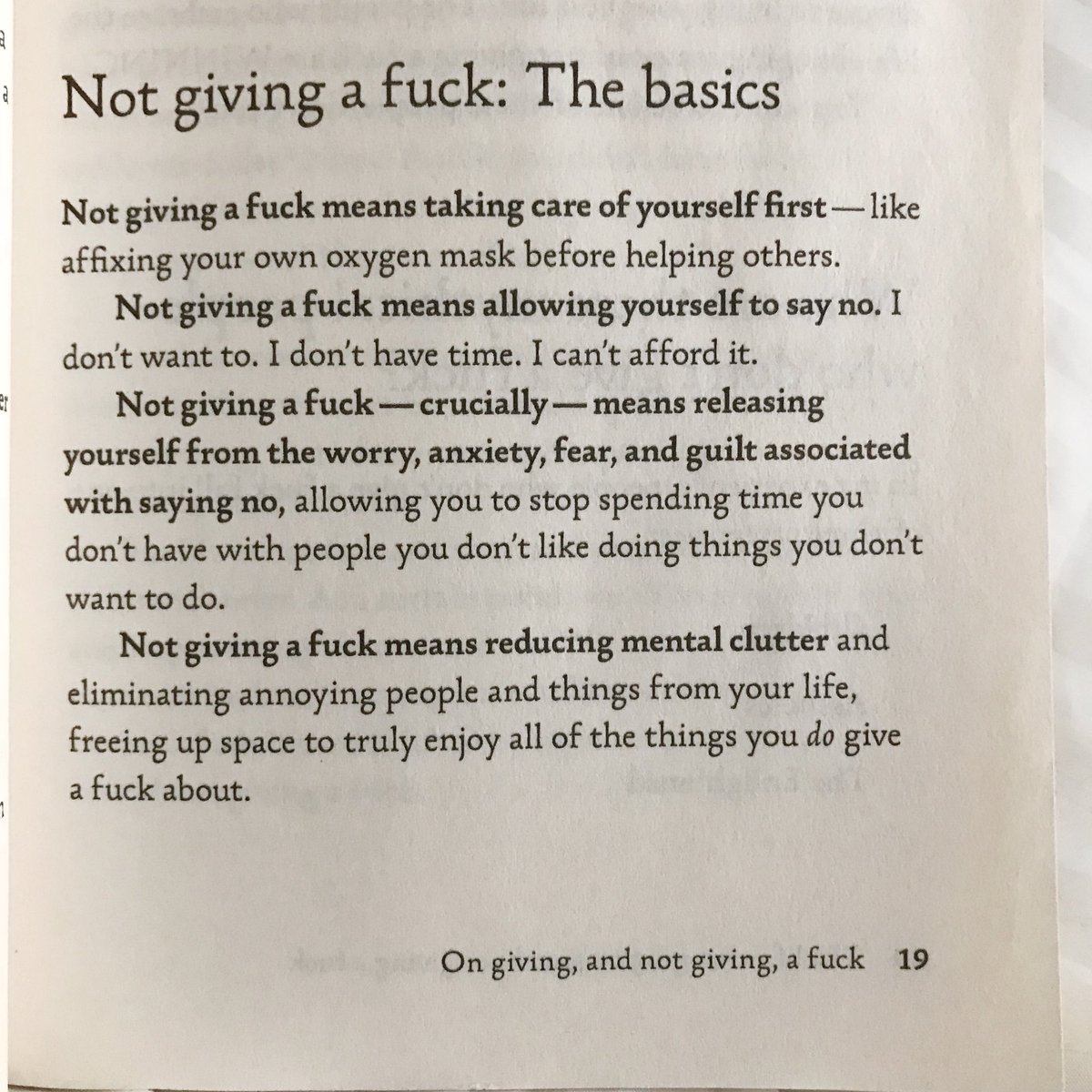
When we say we are not giving fucks, it doesn't mean that we are indifferent to everything around us and do whatever we want to. These people are called -- as the author puts it -- a psychopath.

He lists 3 points of how not giving fucks look like:
1. Be comfortable on not meeting the expectations of others
2. Give fucks to things that are actually important
3. Understand that you are responsible for what fucks to give in your life

It is impossible to not to give fucks on anything: our life is full of problems and suffering; we just have to find those that we enjoy giving fucks to.

Related image

There are many points presented in the book (some of which I am not even sure whether they are related to the topic of the book) but I particularly like this one:

While we always think that a person who feels he is better than everyone else is a narcissist, the opposite is true too.

Self-victimisation is a form of entitlement.

Have you ever been afraid of being a laughing stock when you have gotten a bad haircut, or somehow felt there is something wrong with yourself because other bus passengers are not keen to take the empty seats beside you, or thought that people suddenly behave differently because of you?

In reality? People hardly care.

When we are terrified of what others think about us, it actually means that WE are terrified of all the shitty things we think about ourselves being reflected back at us.

The typical narcissist thinks that he deserves special treatment because he is better than everyone.

As most of us know that we are not in the top 1-percentile, we decide to play the other card instead:
"Because I suck and the rest of you are awesome, I deserve special treatment."

If you have learned the normal distribution, you should have known that most of us are pretty mediocre; neither are we awesome nor we really suck.

Knowing that you are not special, that others have the same problems as yours, is the first way of solving your problems. You should always define yourself as an ordinary person -- father, student, friend -- rather than some genius or superstar. The knowledge and acceptance of your own mundane existence will free you to accomplish what you truly wish to accomplish, without judgment or lofty expectations.

And eventually, it frees yourself from giving unnecessary fucks.